Favorite Blog Post : 4th Quarter

My favorite blog post this year is "What does your name say about you?"

My favorite blog post that I chose has many connections to what we have been talking about in class and I enjoyed writing it very much. I think that this quarter I definitely dropped the ball on blogging. I have almost no blogs for the month of April and only two for May. But do think that my blogging this quarter has greatly improved. I'm not going to lie, at the beginning of this year blogging was much more of a chore to me than something I enjoyed. But, as the year has progressed I have come to really enjoy blogging and am so glad I am in a class that does it. Blogging has made me more comfortable writing and forced me to make connections from out class to the real world. Although I may not continue blogging after this class I will surely (shirley?) continue making connections from the news to my life.

Monday, January 11, 2010

Apparently Blagojevich is "blacker" than Obama

On the radio this morning my mom and I heard a news segment saying that Rod Blagojevich had been quoted as saying, "I'm blacker than Barack Obama". (Here's an article) First of all, no Rod Blagojevich you are not blacker than Obama. Unless Blagojevich carries the recessive gene and actually has ancestry from Africa this statement is false. But I think the more disturbing part of this is Blagojevich's definition of what it means to be black. He continues by saying, "I shined shoes. I grew up in a five-room apartment. My father had a little laundromat in a black community not far from where we lived, I saw it all growing up." This is what truly makes me cringe. According to Blagojevich, in order to qualify as "black" you must

#1: Have a job growing up
#2: Live in an apartment
#3: Have an employed father
#4: "See it all"

Really? I know that I have greatly simplified what Blagojevich was trying to say, but frankly I'm not really sure what exactly he was trying to say. What does it mean when you "saw it all growing up"? What do you think Blagojevich was really trying to say?

Sunday, January 10, 2010

Balloon Boy not a Hoax?


Before winter break as a class we did an  exercise to test the validity of a narrator. We were given several scenarios and were asked to decide whether we could trust what the narrator was telling us. The purpose of the exercise was to prepare us for Adventures of Huckleberry Finn. So far in our reading the most unreliable character in the book has been Pap. As I was watching the news one morning before school I saw an interview(not the exact interview I watched, but a similar one) with Richard Heene, that father of Falcon Heene, more commonly known as Balloon Boy.


In this interview Heene claims that the he did not put his sin in a balloon in order to get attention from the media, that in was in fact not a hoax. As I was watching the interview the entire time I did not believe a word that was coming out of his mouth. Instances such as this led me to believe he was a very unreliable narrator:

                  "Sum and substance, you believed your son was 
                   in the craft?" King asked.


                  "I knew he was in the craft when I ..." Heene began


                  "Well, you didn't know it, of course," King said.


                  "No, no, no. In my mind," Heene said. 
                  "In my mind. There was no other place,
                   'cause I visualized him. I yelled at him to -- to not go in."


Even from this brief moment in the interview, a moment where he mistakenly contradicts himself, the narrator's validity becomes less. Needless to say, I still believe that this man orchestrated the hoax and do not feel his argument is true.

Thursday, January 7, 2010

The Talking Eggs

One of my absolute favorite books when I was little was the book the Talking Eggs. Its a book for older children, not a book for three and four year olds. I didn't start reading it till I was about six, but it instantly became one of my favorites.

Here is a quick summary of the book from amazon.com
                In this adaptation of a Creole folktale, Blanche is kind, loving and patient, but her older sister Rose  takes after their mean, sneaky mother. One day Blanche befriends a hideous old "aunty" on a path near her home and is rewarded with magic eggs. Of course, Rose and the girls' mother are beside themselves with envy, and Rose sets out to snag some eggs of her own. But greedy Rose's cruel nature gets her into trouble. She torments the old lady, grabs the wrong eggs and ends up "angry, sore and stung." Pinkney's exquisitely wrought illustrations are close cousins to those in his Caldecott Honor Book Mirandy and Brother Wind , with similar woodlands and soft farmyard settings of the rural South. When the magic begins, the witch takes off her head, dressed-up rabbits do the Virginia reel and eggs begin to chatter. There are some spectacular scenes here. Ages 4-8.

In this book many different "secret messages" are conveyed to the reader, the biggest being greed is punished and virtue is rewarded. Blanche's kind nature and hard work throughout her life brings her wealth and riches while her mother and Rose end up with no money because of their greed and past abuse of Blanche. I don't disagree that these things should happen, but in the real world it is certainly not uncommon for greed to be rewarded and virtue to be punished. Another theme that is embedded in this book is the "American Dream", Blanche ultimately captures this dream and goes from a poor black girl in rural Louisiana to a "grand lady" in the city. She is able to seize the dream because of her hard work while Rose, who feels entitled to riches, captures nothing and stays in their cabin in the woods.

Another more negative message that I can see in the book is the message that women can't find wealth on their own. Granted that I was very difficult for three black women in the south during the late nineteenth century to find any sort of wealth, but to children reading this book, most would have no idea of that challenge. They could only see Blanche gaining wealth through finding a mysterious woman in the woods and benefiting from her unusual wealth.


Tuesday, January 5, 2010

The Exploitation of Children

Today in class we began to discuss the exploitation of children in advertisements and whether or it was ethical. My initial feeling towards it was that the process was extremely unethical. I was scared by the thought of children in the world being used as tools by the corporations. It seemed like the commercials were some how altering the children and making them nagging little pests. And in a way I still believe that, the products created for children are giving them an image which I'm not sure I want children to follow. Products like Barbie can be bad enough, but products like Bratz and Diva Dolls? Who wants little girls to play with dolls who just by their names encourage girls to be bratty and demand attention? Apparently the companies that produce and market these dolls want to create a generation of divas. But then again, I'm not sure my beef with these dolls falls under unethical. I believe the exploitation of children in advertisements is unethical because they use the children as tools.

If the children the advertisements had money and a sense of a budget, I would have less of a problem with the advertisements. The fact that these corporations are manipulating the children to influence the parent's decision to buy a toy or not makes the exploitation unethical. The research the company conducts is focused on the manipulation of children not on the toy itself. Marketing and advertising are essential to the success of the corporation, but unless the company has a quality toy to sell, marketing can only do so much. The psychologists should send more time researching the child's interest in the toy rather that than the child tendency to nag their parents.

Monday, January 4, 2010

A Child's Innocence

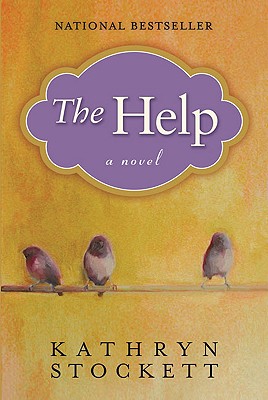
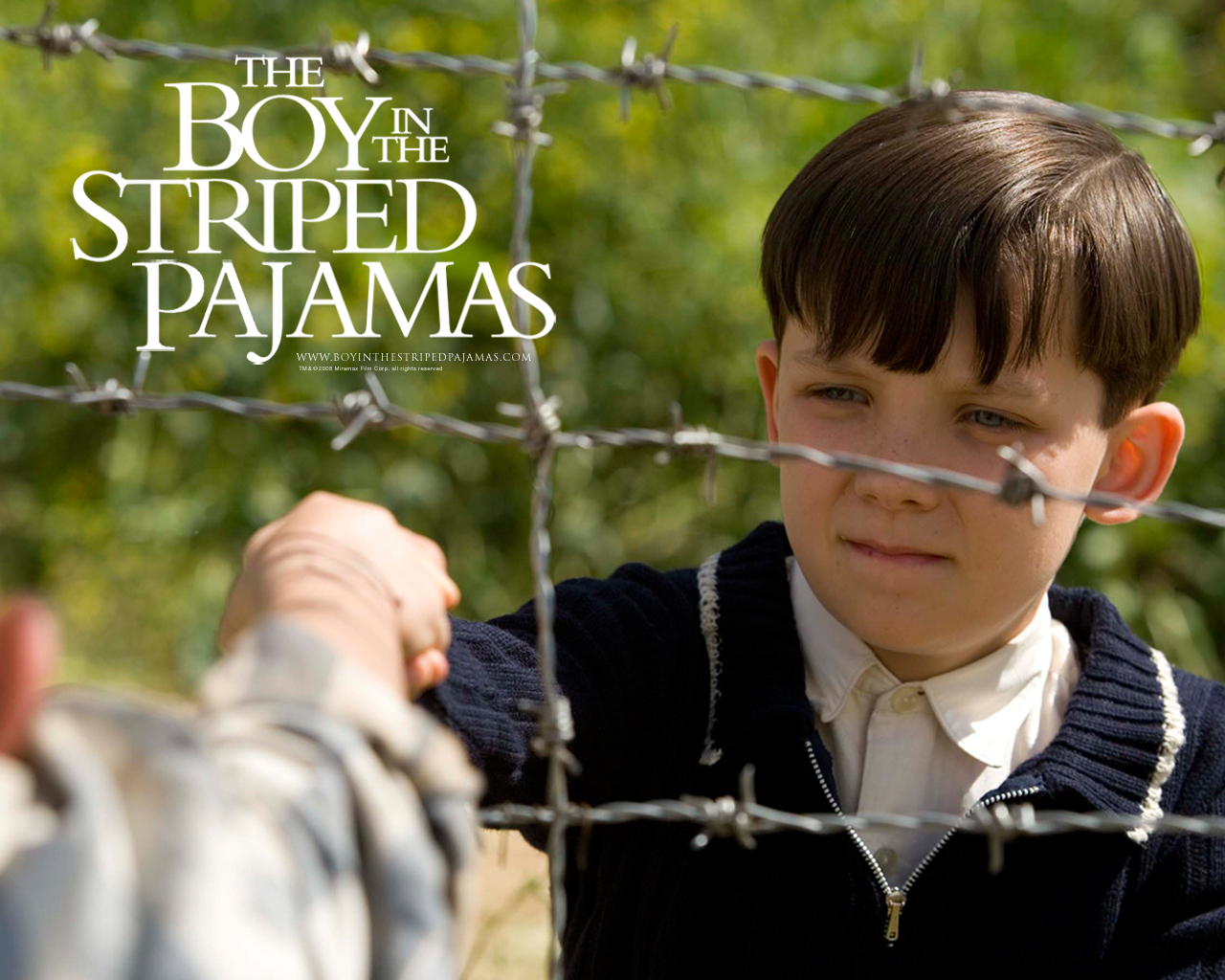
Over break I read a book called The Help and watched a movie called The Boy in the Striped Pajamas. Both touch upon the subject of when a child begins to lose their innocence and when they become influenced by the prejudice of the society around them. Needless to say, I am writing this blog post from the view that children are born innocent and become corrupt as they age, which is a topic we have touched upon in class, whether children are born innocent or born corrupt.

In the novel, The Help the character Aibileen is an African-American maid in Mississippi during the 1960s. As part of her job she cares for her employer's daughter Mae Mobley. Aibileen cares for her from the moment she is born and the two form a very close relationship, closer than Mae Mobley's relationship with her mother. As the novel continues and Mae Mobley grows, Aibileen is concerned about whether or not Mae is going to become racist and see Aibileen as her mother does and the rest of white Mississippi. All of Aibileen's previous jobs have only lasted eight years or so, because Aibileen would leave the house when the children began to "turn" agaisnt her. Mae Mobley begins to notice the difference between her black maid and her white mother at the age of four.

In the movie The Boy in the Stirped Pajamas a little boy named Bruno is the son of a Nazi commander who runs a concentration camp. The family lives near by the camp and Bruno is curious of what exactly the the camp is. As he explores the woods surrounding his house, he discovers a fence and a young boy of his age on the other side. As he gains more knowledge of the camp he discovers the boy is a Jew, throughout the movie the boy struggles to decide whether or not to trust him and to become his friend. Bruno and the young boy are seven years old.

So my question to you is when did the opinions of your parents begin to influence your opinions? What about the society you grew up in?