I was looking for something to blog about, when I went onto the cnn website today and found an article entitled Does you name shape your destiny?. When I began to read it I found that it talked about whether or not the name you are given has an impact on things such as your. According to the article people with "black-sounding" names such as Lakisha and Jamal are 50 percent less likely to receive a call back for a job interview compared to "white-sounding" names such as Emily or Greg." I found this interesting because it related to TV Tokenism that Mr. Bolos had talked about. Something he didn't address but I would be interested to learn about would be the names of the characters who represent the minorities. It seems to me that is there is a black man who is playing the role of police cheif, he is less likely to have a "black sounding" name than a black man playing a role of the criminal. Examples of this that I found was from "24", the president's name is Dennis Palmer, a very "white sounding" name and from Grey's Anatomy with the token asian character being names "Christina".
Not only did the article talk about how a person's name can influence their lives both negatively and positively, but it talked about the growing diversity of names. Even the most popular names now don't represent as many people as they used to. As the article points out, parents now don't want their children to fit in with society, they want them to stand out and be different. Names now need to have a special meaning like the name "Nevaeh"which is heaven spelled backwards. This made me think of our discussions on class. We watched the video about class and how lower classes had to learn how to act and be part of the upper class. Classes in America aren't just about how much money you make, they have become socially distinct. Names have a lot to do with this, you won't find many "black sounding" names in upper class family. Now, with names beceoming more diverse I believe that names won't be as influential in playing a role in class. We looked at the interactive chart that Mr. Bolos showed us that showed the popularity of names in America. But now with more diverse names I don't think that emplyers will be able make such judgements only based on a person's name because they will come across a name they have never heard before and won't have a preconcieved opion about the name.
What do you think? How much influence do you think names have?
Wednesday, May 26, 2010
Tuesday, May 25, 2010
American Studies Day
Even though American Studies Day was almost five days ago, it seems that everything I consume relates back to this day. I thought the Day was a perfect way to help cap off a wonderful year in the class that I felt I have gown the most in. After American Studies Day i discovered that my older sister often attends Slam Poetry events in her college town of St. Paul. This excited me because I enjoyed the Slam Poets that came so much and want to attend the Louder Than A Bomb festival next year. In fact Thursday night I went home and found this clip on YouTube:
I have watched this clip several time and continue to get goosebumps.
Another encounter I have had with American Studies Day has to do with Mr. B's TV Tokenism. One of my favorite shows is Friday Night Lights. The fourth season recently started and Saturday Afternoon I sat down at my computer to watch the episode I had missed. While watching it I witnessed the very thing we had talked about the day before. Although I cannot figure out embed a clip from Hulu, I can send you to this link and tell you to start watching at 23:40 and continue watching until 25:54.
The "token" black character in the scene is referred to as being some kind of "voodoo" women. This is exactly how the medical examiner in CSI was referred to from the clip we waatched in class and both characters are black. I think this strengthens Mr. B's argument because of the similarities between the two scenes. Just as Mr. B argues, minority characters although being put in positions of authority are the roles are very 2-dimentional. Something else that I noticed in this scene was that the "token" black character was actually very fair skinned. She fulfilled the requirement of a minority in the show but has fair skin and looks "white".
I have watched this clip several time and continue to get goosebumps.
Another encounter I have had with American Studies Day has to do with Mr. B's TV Tokenism. One of my favorite shows is Friday Night Lights. The fourth season recently started and Saturday Afternoon I sat down at my computer to watch the episode I had missed. While watching it I witnessed the very thing we had talked about the day before. Although I cannot figure out embed a clip from Hulu, I can send you to this link and tell you to start watching at 23:40 and continue watching until 25:54.
The "token" black character in the scene is referred to as being some kind of "voodoo" women. This is exactly how the medical examiner in CSI was referred to from the clip we waatched in class and both characters are black. I think this strengthens Mr. B's argument because of the similarities between the two scenes. Just as Mr. B argues, minority characters although being put in positions of authority are the roles are very 2-dimentional. Something else that I noticed in this scene was that the "token" black character was actually very fair skinned. She fulfilled the requirement of a minority in the show but has fair skin and looks "white".
Tuesday, April 20, 2010
Junior Theme Update #2
So for my second Junior Theme Update I am going to talk about my interview! I thought I was going to have trouble finding someone to interview, but actually I have two interviews lined up!
My first Interview is with the Senior Pastor at Winnetka Covenant Church, Peter Hawkinson, which contrary to the name is an evangelical church. I think he will be a great resource because obviously he is the head of an evangelical church but also because he is not the head of a megachurch or a fundamental evangelical church, but the kind of church that the majority of evangelicals attend.
My second interview is actually with the author of the book I used for research. The book is entitled A Lover's Quarrel With the Evangelical Church and his name is Warren Cole Smith. I'm very excited for this interview as well because as opposed to Rev. Hawkinson, Mr. Smith is not one of the people "running the show" but he was someone who was drawn to the Evangelical Church, which is exactly what I am researching: why people are attracted to the evangelical church?
My first Interview is with the Senior Pastor at Winnetka Covenant Church, Peter Hawkinson, which contrary to the name is an evangelical church. I think he will be a great resource because obviously he is the head of an evangelical church but also because he is not the head of a megachurch or a fundamental evangelical church, but the kind of church that the majority of evangelicals attend.
My second interview is actually with the author of the book I used for research. The book is entitled A Lover's Quarrel With the Evangelical Church and his name is Warren Cole Smith. I'm very excited for this interview as well because as opposed to Rev. Hawkinson, Mr. Smith is not one of the people "running the show" but he was someone who was drawn to the Evangelical Church, which is exactly what I am researching: why people are attracted to the evangelical church?
Sunday, April 18, 2010
Junior Theme Update
So my question for the Junior theme is to answer the question: Why has the membership of the evangelical church dramatically increased? So far I have discovered some great articles through JSTOR. One of the things I initially had trouble with was to define exactly what an evangelical church is. After figuring out exactly what that was my research be came a lot easier. According to one of my articles evangelical means a group of people who:
1. have been or are seeking a "born-again" experience and have a personal relationship with Christ
2. take the Bible literally
3. are committed to spreading "the Good News" and "bearing public witness to their faith"
Also, within the evangelical faith there are four "subcultures"
-Fundamentalists
-Pentecostals
-Charismatics (typically associated with megachurches)
- neo-evangelicals
Along with the great articles from JSTOR and CQ researches I am in the middle of my book, A Lover's Quarrel with the Evangelical Church, which is a great resource because it is from the point of view of a member of the evangelical church.
1. have been or are seeking a "born-again" experience and have a personal relationship with Christ
2. take the Bible literally
3. are committed to spreading "the Good News" and "bearing public witness to their faith"
Also, within the evangelical faith there are four "subcultures"
-Fundamentalists
-Pentecostals
-Charismatics (typically associated with megachurches)
- neo-evangelicals
Along with the great articles from JSTOR and CQ researches I am in the middle of my book, A Lover's Quarrel with the Evangelical Church, which is a great resource because it is from the point of view of a member of the evangelical church.
Wednesday, March 17, 2010
I love the New Millennium?
Throughout our American Studies Class, Mr. Bolos and Mr. O'Connor have reinforced the idea that everything is a construction. During class on Friday we watched a video on the 1920's and we briefly discussed what and why things were chosen to be put in the video that was supposed to represent the entire decade. This made me think of these television specials on VH1 that are called I Love the (insert decade). There are ten segments of the decade, each focusing on a different year. So, the special I Love the 80s, would have ten segments starting with I Love 1980 and ending with I Love 1989. I know it may seem like a far stretch to go from an educational video straight to VH1, but they are similar.
The TV special's format is nothing like our 1920's video, yet they both had to make choices on what to include in order to give the viewer "the whole picture" of that decade. Which celebrities to highlight, which scandals to poke fun at, and which fashion trend to be embarrassed by. Although the "experts" on VH1 are all comedians and popular figures from that time period and the 1920's video was the host (I forgot his name) taking us through his family tree they both constructed the show that was produced.
During our classes many times people have brought up what the think will be included in an educational video about the first decade in the new Millennium and it just so happens that VH1 has produced seven segments starting with I Love the New Millennium: 2000 and ending with I Love the New Millennium: 2007. I thought it would be interesting to show you what some of the highlights that VH1 has chosen to represent this decade are. (Warning: this list is also a construction.)
The TV special's format is nothing like our 1920's video, yet they both had to make choices on what to include in order to give the viewer "the whole picture" of that decade. Which celebrities to highlight, which scandals to poke fun at, and which fashion trend to be embarrassed by. Although the "experts" on VH1 are all comedians and popular figures from that time period and the 1920's video was the host (I forgot his name) taking us through his family tree they both constructed the show that was produced.
During our classes many times people have brought up what the think will be included in an educational video about the first decade in the new Millennium and it just so happens that VH1 has produced seven segments starting with I Love the New Millennium: 2000 and ending with I Love the New Millennium: 2007. I thought it would be interesting to show you what some of the highlights that VH1 has chosen to represent this decade are. (Warning: this list is also a construction.)
- Presidential Elections
- Music: Who Let the Dogs Out?, Lady Marmalade, Laffy Taffy, Here It Goes Again, You're Beautiful, London Bridge, Hey There Delilah
- TV shows: Survivor, The Daily Show, Fear Factor, The Weakest Link, American Idol, Queer Eye for the Straight Guy, Punk'd
- Movies: Pearl Harbor, Moulin Rouge, Zoolander, Lord of the Rings, The Passion of the Chirst, Napoleon Dynamite, Brokeback Mountain, Borat
- 9/11
- Fashion: Tramp Stamp, Muffin Top, Ugg Boots, Crocs
- Technology: iPod, Segway, YouTube, MySpace, Facebook, Google, iPhone
- Katrina
Thursday, March 11, 2010
Eye Contact and a Handshake
As we discussed the final chapters of The Great Gatsby we talked about what a hand shake can tell you about a person and how long you should hold eye contact with another person. I became very interested in the topic of eye contact. Mr. O'Connor seemed to think that holding eye contact for a long period of time was some sort of animal instinct and a challenge to the other person. I wanted to see if other people agreed with this. While searching the web for an article I saw something that didn't immediately occur to me, each country has a different social interpretation of eye contact.
In Islamic countries, members of the opposite sex should never hold eye contact for more than a couple seconds. Doing this can be considered cheating or even a form of adultery. In other countries it is rude to look at the superior person of the situation in the eyes. As far as animal instincts goes, I agree that there is some part of our DNA that says holding eye contact is a threat. I believe in class we agreed that dogs and bears were animals that saw holding eye contact as a threat and a challenge.
But why is it different in America? In our country we are told when you first meet someone you want to impress you need a firm handshake and to look them in the eye. Or why is it that when I type in "first impression" to Google images one of the first pictures I get is this:
A guy looking straight at the camera and reaching out for a hand shake.
This is a question I actually don't really know what I think about. The only tentative answer I have is that maybe in America we feel that in order to succeed we need to be aggressive, and by being aggressive we tap into those animal instincts and hold eye contact.
What do you think?
In Islamic countries, members of the opposite sex should never hold eye contact for more than a couple seconds. Doing this can be considered cheating or even a form of adultery. In other countries it is rude to look at the superior person of the situation in the eyes. As far as animal instincts goes, I agree that there is some part of our DNA that says holding eye contact is a threat. I believe in class we agreed that dogs and bears were animals that saw holding eye contact as a threat and a challenge.
But why is it different in America? In our country we are told when you first meet someone you want to impress you need a firm handshake and to look them in the eye. Or why is it that when I type in "first impression" to Google images one of the first pictures I get is this:
A guy looking straight at the camera and reaching out for a hand shake.
This is a question I actually don't really know what I think about. The only tentative answer I have is that maybe in America we feel that in order to succeed we need to be aggressive, and by being aggressive we tap into those animal instincts and hold eye contact.
What do you think?
Wednesday, March 10, 2010
Full Body Scan: Strip Search?
TSA has recently begun to install full body scanners at security check points throughout the our nation's airports. As of now three have been installed at Boston's Logan Airport. TSA plans to distribute as many as 150 to the nation's busiest airports. The full body scanners are set up are made for people to stand between two large sensors and a picture of the person being searched will be displayed on the screen of the security officer's computer. The screening gives the security at airports a more accurate idea of if someone is carrying potentially harmful items into the airport. But many question whether these scans violate a person's privacy.
As I said the scanners show a detailed image of a person's body, in an article from the LA Times the scanners were compared to a "virtual strip search". Images such as this appear on the screens of security.
The images are certainly graphic, but should people have to sacrifice their privacy in the name of security. The body scans are effective and you can see in the picture where this man's gun is located. patting down a person may not have been as effective in this situation. In a pat down a woman could potentially hide a weapon in her chest and no security officer is going to pat her down there, but here trade off is another member of security essentially seeing a picture of her naked.
Would you feel comfortable stepping into a full body scanner at O'Hare? Do you feel personal privacy should be sacrificed to ensure national safety? If so, where should the line be drawn?
As I said the scanners show a detailed image of a person's body, in an article from the LA Times the scanners were compared to a "virtual strip search". Images such as this appear on the screens of security.The images are certainly graphic, but should people have to sacrifice their privacy in the name of security. The body scans are effective and you can see in the picture where this man's gun is located. patting down a person may not have been as effective in this situation. In a pat down a woman could potentially hide a weapon in her chest and no security officer is going to pat her down there, but here trade off is another member of security essentially seeing a picture of her naked.
Would you feel comfortable stepping into a full body scanner at O'Hare? Do you feel personal privacy should be sacrificed to ensure national safety? If so, where should the line be drawn?
Wednesday, March 3, 2010
Music Doesn't Count
I'm sure many of us had trouble deciding our senior schedules. I know that I went through at least fifty variations of my schedule until I came up with my final decision. Besides wanting to take advantage of all the wonderful class opportunities offered at New Trier I wanted my schedule to be seen as competitive to the colleges I will eventually apply to.
My final decision was to only take four academic majors my senior year and major in orchestra as well. But, that is exactly how I have to phrase it when talking to other people...I am taking four academic majors and majoring in orchestra too. When I would originally say I am going to take five majors my senior year and would list my math, english, social studies, science, and orchestra, people would immediately respond by saying, "Oh, but orchestra doesn't count."
But, why shouldn't my music class count? Our class discussion about arts in our educational system made me think about this. During the discussion we came to the consensus that New Trier valued the arts while other schools don't. But then why do people question me when I list orchestra as a major? I think that even though music classes can require as much if not more work than academic classes people don't take them seriously. Even at a school like New Trier who has an incredible music department, music is held to a lower standard. But, who decided this?
Do you think music should be held to a lower standard than academic classes? Are there any other classes at New Trier that you feel are overlooked?
Monday, February 22, 2010
Warning: Construction Zone
I'm sure that many of you watch the olympics every night and find new heros to root for. Well, so do I. Actually watching the olympics can become that highlight of my day. But after our discussion about the difference between men's and women's sports and the construction of each sport. I then began to wonder about the construction of the olympics, specifically the construction of the airtime for each sport.
There are fifteen official sports at the Vancouver Winter Games and they certainly don't get equal airtime. Of course NBC favors the american athletes and gives the big stories the most air time. We get to know each athlete and their life story, but do we really need to know all this. Yes, I do love watching the interviews and the inspirational journey to the olympics. But at what cost

I am a big hockey fan, and I watched the awesome game yesterday of the United States Mens team vs. Canada's Mens team. I was disappointed to find out that it was not on NBC, but pushed to MSNBC. There was so much hype about the game and the game itself was such a great game to watch (If you were american). What is interesting to me is that traditionally The more popular sports on American TV are team sports, yet hockey was pushed to the secondary network while Ice Dancing got Primetime. Now I really don't mean to rail on Ice Dancing, I enjoy that too, in fact I am currently watching the Ice Dancing free Skate as I write, but it is curious to me that a sport that so many americans regularly follow gets pushed back fro a sport that we watch once every four years.
Have you noticed any trends in air time for sports? How do you think NBC has constructed what they put in Primetime and what they leave for other networks?
There are fifteen official sports at the Vancouver Winter Games and they certainly don't get equal airtime. Of course NBC favors the american athletes and gives the big stories the most air time. We get to know each athlete and their life story, but do we really need to know all this. Yes, I do love watching the interviews and the inspirational journey to the olympics. But at what cost
I am a big hockey fan, and I watched the awesome game yesterday of the United States Mens team vs. Canada's Mens team. I was disappointed to find out that it was not on NBC, but pushed to MSNBC. There was so much hype about the game and the game itself was such a great game to watch (If you were american). What is interesting to me is that traditionally The more popular sports on American TV are team sports, yet hockey was pushed to the secondary network while Ice Dancing got Primetime. Now I really don't mean to rail on Ice Dancing, I enjoy that too, in fact I am currently watching the Ice Dancing free Skate as I write, but it is curious to me that a sport that so many americans regularly follow gets pushed back fro a sport that we watch once every four years.
Have you noticed any trends in air time for sports? How do you think NBC has constructed what they put in Primetime and what they leave for other networks?
Thursday, February 11, 2010
Senate's Apology
During our discussions in class about reparations, I found myself remembering hearing about an apology from the government for slavery. I then found an article reporting just that, a formal apology from the Senate.
The interesting aspect of this apology is that the Senate specifically stated that it cannot be seen as a form of reparation. The reason this is so interesting to me is that during our class discussions we all seemed to come to the consensus that the best form of reparation does not necessarily include a check but rather an apology. I agree with this, at this point in time I don't think that money is going to heal any wounds that were created by slavery. If it were during the time of reconstruction, I think monetary reparation would be completely appropriate. In fact the US government attempted this by giving all former slaves 40 acres and a mule, but that solution clearly failed.
This resolution was seen as an "important and significant milestone" by Senator Tim Harkin, but throughout the article we were reminded that this apology should not be seen as a form of reparation for slavery. But why can't it be? Even if no monetary compensation has been made, I believe that an apology is worth much more. Especially in a time where it would be very difficult to determine who deceives that check.
However, even though I believe that the time for monetary compensation for slavery has passed, I think that this apology was very appropriate, no matter how overdue. I would even support a separate apology and some sort of monetary compensation to those African Americans still alice who endured the Jim Crow laws.
The interesting aspect of this apology is that the Senate specifically stated that it cannot be seen as a form of reparation. The reason this is so interesting to me is that during our class discussions we all seemed to come to the consensus that the best form of reparation does not necessarily include a check but rather an apology. I agree with this, at this point in time I don't think that money is going to heal any wounds that were created by slavery. If it were during the time of reconstruction, I think monetary reparation would be completely appropriate. In fact the US government attempted this by giving all former slaves 40 acres and a mule, but that solution clearly failed.
This resolution was seen as an "important and significant milestone" by Senator Tim Harkin, but throughout the article we were reminded that this apology should not be seen as a form of reparation for slavery. But why can't it be? Even if no monetary compensation has been made, I believe that an apology is worth much more. Especially in a time where it would be very difficult to determine who deceives that check.
However, even though I believe that the time for monetary compensation for slavery has passed, I think that this apology was very appropriate, no matter how overdue. I would even support a separate apology and some sort of monetary compensation to those African Americans still alice who endured the Jim Crow laws.
Monday, January 11, 2010
Apparently Blagojevich is "blacker" than Obama
On the radio this morning my mom and I heard a news segment saying that Rod Blagojevich had been quoted as saying, "I'm blacker than Barack Obama". (Here's an article) First of all, no Rod Blagojevich you are not blacker than Obama. Unless Blagojevich carries the recessive gene and actually has ancestry from Africa this statement is false. But I think the more disturbing part of this is Blagojevich's definition of what it means to be black. He continues by saying, "I shined shoes. I grew up in a five-room apartment. My father had a little laundromat in a black community not far from where we lived, I saw it all growing up." This is what truly makes me cringe. According to Blagojevich, in order to qualify as "black" you must#1: Have a job growing up
#2: Live in an apartment
#3: Have an employed father
#4: "See it all"
Really? I know that I have greatly simplified what Blagojevich was trying to say, but frankly I'm not really sure what exactly he was trying to say. What does it mean when you "saw it all growing up"? What do you think Blagojevich was really trying to say?
Sunday, January 10, 2010
Balloon Boy not a Hoax?
Before winter break as a class we did an exercise to test the validity of a narrator. We were given several scenarios and were asked to decide whether we could trust what the narrator was telling us. The purpose of the exercise was to prepare us for Adventures of Huckleberry Finn. So far in our reading the most unreliable character in the book has been Pap. As I was watching the news one morning before school I saw an interview(not the exact interview I watched, but a similar one) with Richard Heene, that father of Falcon Heene, more commonly known as Balloon Boy.
In this interview Heene claims that the he did not put his sin in a balloon in order to get attention from the media, that in was in fact not a hoax. As I was watching the interview the entire time I did not believe a word that was coming out of his mouth. Instances such as this led me to believe he was a very unreliable narrator:
"Sum and substance, you believed your son was
in the craft?" King asked.
"I knew he was in the craft when I ..." Heene began
"Well, you didn't know it, of course," King said.
"No, no, no. In my mind," Heene said.
"In my mind. There was no other place,
'cause I visualized him. I yelled at him to -- to not go in."
Even from this brief moment in the interview, a moment where he mistakenly contradicts himself, the narrator's validity becomes less. Needless to say, I still believe that this man orchestrated the hoax and do not feel his argument is true.
Thursday, January 7, 2010
The Talking Eggs
One of my absolute favorite books when I was little was the book the Talking Eggs. Its a book for older children, not a book for three and four year olds. I didn't start reading it till I was about six, but it instantly became one of my favorites.
Here is a quick summary of the book from amazon.com
In this adaptation of a Creole folktale, Blanche is kind, loving and patient, but her older sister Rose takes after their mean, sneaky mother. One day Blanche befriends a hideous old "aunty" on a path near her home and is rewarded with magic eggs. Of course, Rose and the girls' mother are beside themselves with envy, and Rose sets out to snag some eggs of her own. But greedy Rose's cruel nature gets her into trouble. She torments the old lady, grabs the wrong eggs and ends up "angry, sore and stung." Pinkney's exquisitely wrought illustrations are close cousins to those in his Caldecott Honor Book Mirandy and Brother Wind , with similar woodlands and soft farmyard settings of the rural South. When the magic begins, the witch takes off her head, dressed-up rabbits do the Virginia reel and eggs begin to chatter. There are some spectacular scenes here. Ages 4-8.
Another more negative message that I can see in the book is the message that women can't find wealth on their own. Granted that I was very difficult for three black women in the south during the late nineteenth century to find any sort of wealth, but to children reading this book, most would have no idea of that challenge. They could only see Blanche gaining wealth through finding a mysterious woman in the woods and benefiting from her unusual wealth.
Here is a quick summary of the book from amazon.com
In this adaptation of a Creole folktale, Blanche is kind, loving and patient, but her older sister Rose takes after their mean, sneaky mother. One day Blanche befriends a hideous old "aunty" on a path near her home and is rewarded with magic eggs. Of course, Rose and the girls' mother are beside themselves with envy, and Rose sets out to snag some eggs of her own. But greedy Rose's cruel nature gets her into trouble. She torments the old lady, grabs the wrong eggs and ends up "angry, sore and stung." Pinkney's exquisitely wrought illustrations are close cousins to those in his Caldecott Honor Book Mirandy and Brother Wind , with similar woodlands and soft farmyard settings of the rural South. When the magic begins, the witch takes off her head, dressed-up rabbits do the Virginia reel and eggs begin to chatter. There are some spectacular scenes here. Ages 4-8.
In this book many different "secret messages" are conveyed to the reader, the biggest being greed is punished and virtue is rewarded. Blanche's kind nature and hard work throughout her life brings her wealth and riches while her mother and Rose end up with no money because of their greed and past abuse of Blanche. I don't disagree that these things should happen, but in the real world it is certainly not uncommon for greed to be rewarded and virtue to be punished. Another theme that is embedded in this book is the "American Dream", Blanche ultimately captures this dream and goes from a poor black girl in rural Louisiana to a "grand lady" in the city. She is able to seize the dream because of her hard work while Rose, who feels entitled to riches, captures nothing and stays in their cabin in the woods.
Tuesday, January 5, 2010
The Exploitation of Children
Today in class we began to discuss the exploitation of children in advertisements and whether or it was ethical. My initial feeling towards it was that the process was extremely unethical. I was scared by the thought of children in the world being used as tools by the corporations. It seemed like the commercials were some how altering the children and making them nagging little pests. And in a way I still believe that, the products created for children are giving them an image which I'm not sure I want children to follow. Products like Barbie can be bad enough, but products like Bratz and Diva Dolls? Who wants little girls to play with dolls who just by their names encourage girls to be bratty and demand attention? Apparently the companies that produce and market these dolls want to create a generation of divas. But then again, I'm not sure my beef with these dolls falls under unethical. I believe the exploitation of children in advertisements is unethical because they use the children as tools.
If the children the advertisements had money and a sense of a budget, I would have less of a problem with the advertisements. The fact that these corporations are manipulating the children to influence the parent's decision to buy a toy or not makes the exploitation unethical. The research the company conducts is focused on the manipulation of children not on the toy itself. Marketing and advertising are essential to the success of the corporation, but unless the company has a quality toy to sell, marketing can only do so much. The psychologists should send more time researching the child's interest in the toy rather that than the child tendency to nag their parents.
Monday, January 4, 2010
A Child's Innocence
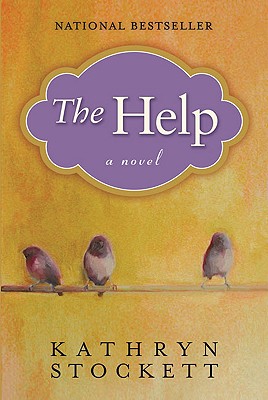
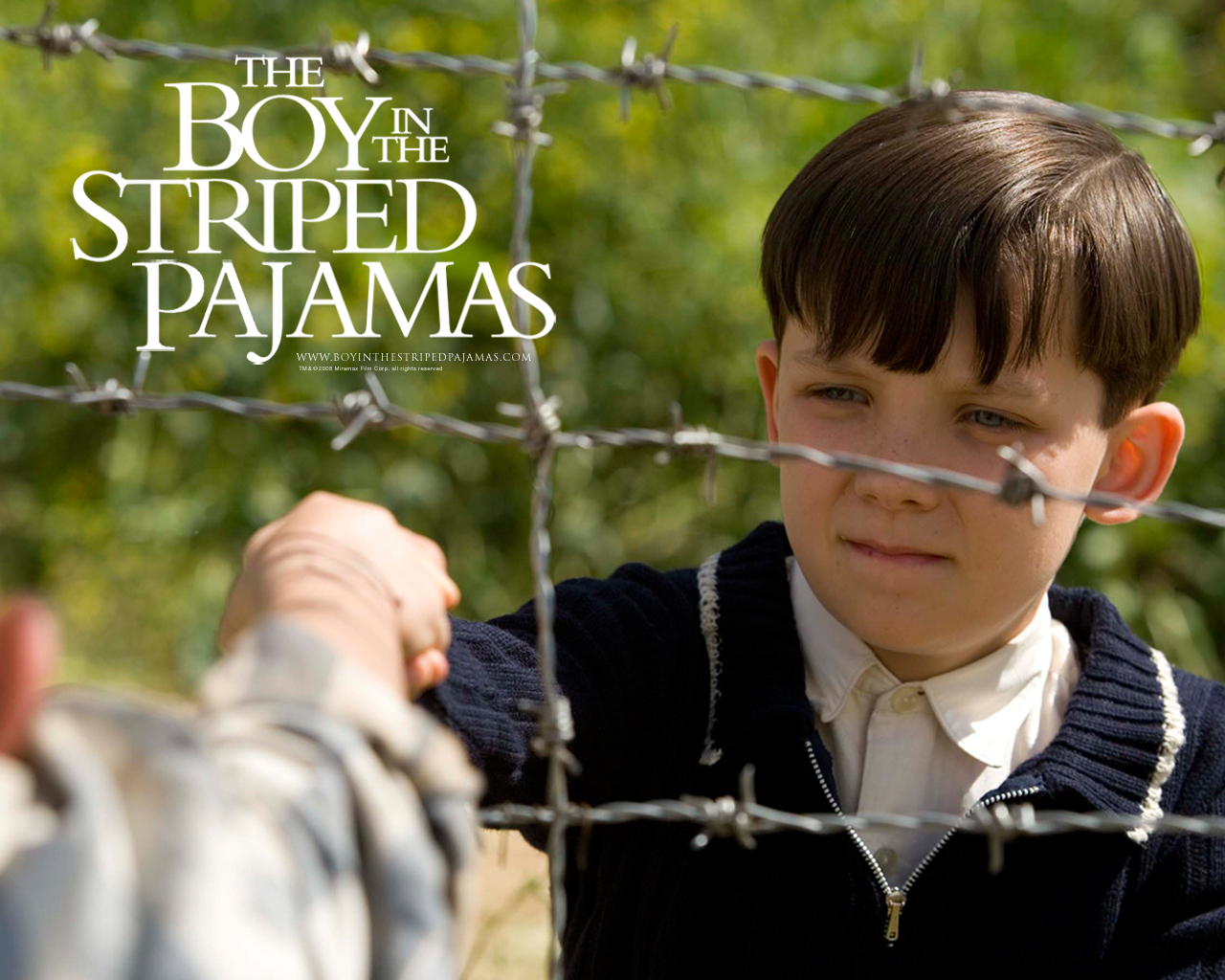
Over break I read a book called The Help and watched a movie called The Boy in the Striped Pajamas. Both touch upon the subject of when a child begins to lose their innocence and when they become influenced by the prejudice of the society around them. Needless to say, I am writing this blog post from the view that children are born innocent and become corrupt as they age, which is a topic we have touched upon in class, whether children are born innocent or born corrupt.

In the novel, The Help the character Aibileen is an African-American maid in Mississippi during the 1960s. As part of her job she cares for her employer's daughter Mae Mobley. Aibileen cares for her from the moment she is born and the two form a very close relationship, closer than Mae Mobley's relationship with her mother. As the novel continues and Mae Mobley grows, Aibileen is concerned about whether or not Mae is going to become racist and see Aibileen as her mother does and the rest of white Mississippi. All of Aibileen's previous jobs have only lasted eight years or so, because Aibileen would leave the house when the children began to "turn" agaisnt her. Mae Mobley begins to notice the difference between her black maid and her white mother at the age of four.
In the movie The Boy in the Stirped Pajamas a little boy named Bruno is the son of a Nazi commander who runs a concentration camp. The family lives near by the camp and Bruno is curious of what exactly the the camp is. As he explores the woods surrounding his house, he discovers a fence and a young boy of his age on the other side. As he gains more knowledge of the camp he discovers the boy is a Jew, throughout the movie the boy struggles to decide whether or not to trust him and to become his friend. Bruno and the young boy are seven years old.
So my question to you is when did the opinions of your parents begin to influence your opinions? What about the society you grew up in?

In the novel, The Help the character Aibileen is an African-American maid in Mississippi during the 1960s. As part of her job she cares for her employer's daughter Mae Mobley. Aibileen cares for her from the moment she is born and the two form a very close relationship, closer than Mae Mobley's relationship with her mother. As the novel continues and Mae Mobley grows, Aibileen is concerned about whether or not Mae is going to become racist and see Aibileen as her mother does and the rest of white Mississippi. All of Aibileen's previous jobs have only lasted eight years or so, because Aibileen would leave the house when the children began to "turn" agaisnt her. Mae Mobley begins to notice the difference between her black maid and her white mother at the age of four.
In the movie The Boy in the Stirped Pajamas a little boy named Bruno is the son of a Nazi commander who runs a concentration camp. The family lives near by the camp and Bruno is curious of what exactly the the camp is. As he explores the woods surrounding his house, he discovers a fence and a young boy of his age on the other side. As he gains more knowledge of the camp he discovers the boy is a Jew, throughout the movie the boy struggles to decide whether or not to trust him and to become his friend. Bruno and the young boy are seven years old.So my question to you is when did the opinions of your parents begin to influence your opinions? What about the society you grew up in?
Subscribe to:
Posts (Atom)


![Reblog this post [with Zemanta]](http://img.zemanta.com/reblog_e.png?x-id=e23d9b34-20b1-4f85-92ae-1b7c58fa9a52)

![Reblog this post [with Zemanta]](http://img.zemanta.com/reblog_e.png?x-id=bda1809f-bb03-45b7-bfce-547569b65ad3)